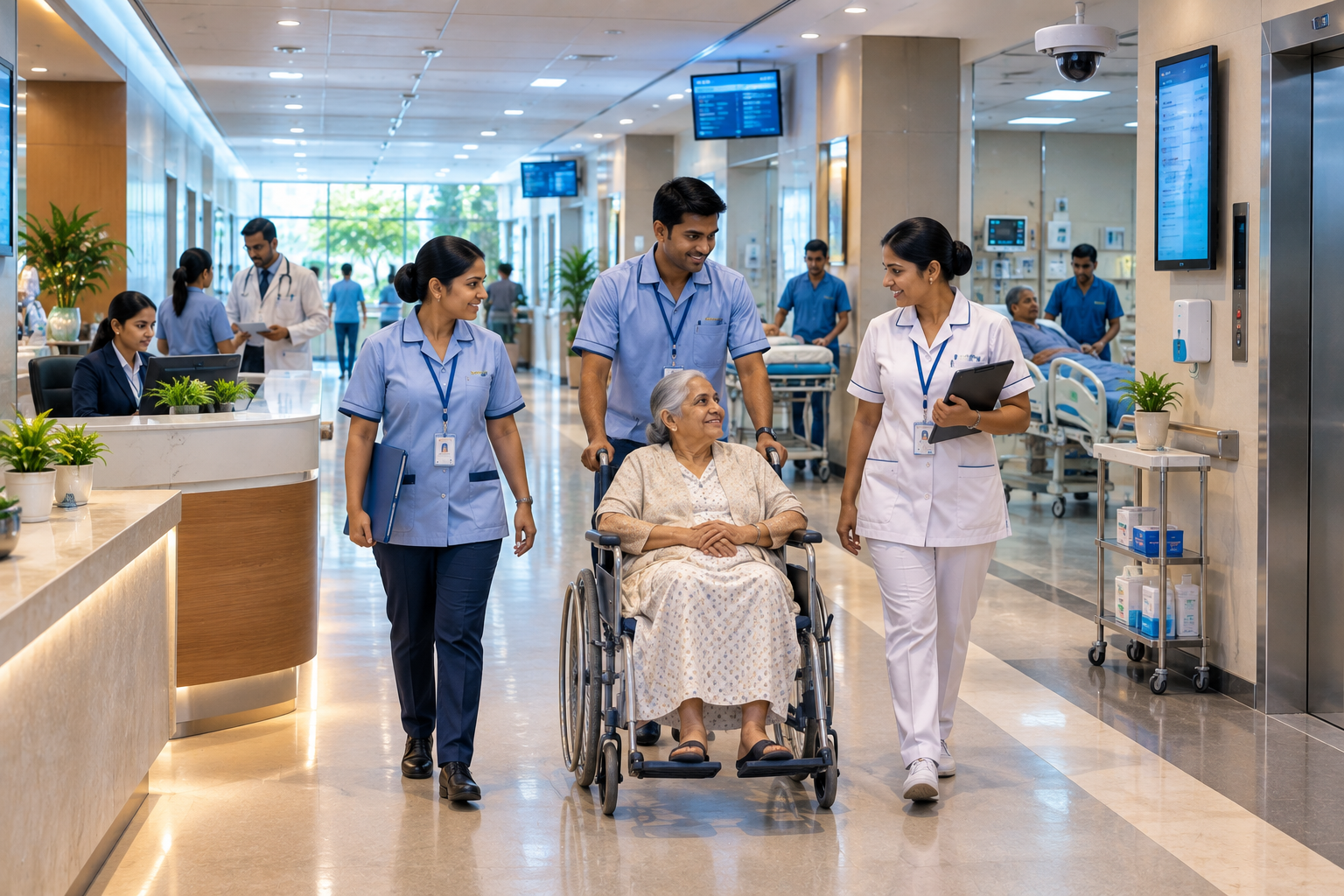
Hospitals are complex environments where patients need not only medical treatment but also continuous support, assistance, and attention. Doctors and nurses focus primarily on clinical care, while General Duty Assistants (GDA) support patients and healthcare teams with essential non-clinical and patient-care-related activities. Trained GDA staff can therefore play an important role in maintaining efficient, safe, and patient-friendly hospital operations.
What Is a GDA?
A General Duty Assistant is a trained healthcare support professional who assists patients and clinical teams with routine care and daily activities under appropriate supervision. Depending on the hospital’s requirements and assigned responsibilities, GDAs may assist with patient mobility, transportation, basic hygiene support, ward activities, and maintaining a comfortable environment for patients.
Their role is particularly valuable in hospitals where patients may require assistance moving between departments or need additional support with routine activities.
1. Better Patient Support
Patients recovering from illness, surgery, injury, or other medical conditions may require assistance with mobility and everyday activities. Trained GDAs can provide appropriate support while following hospital procedures and instructions from clinical staff.
This can make patients feel more comfortable and supported during their hospital stay.
2. Assistance to Doctors and Nurses
Healthcare professionals often manage multiple patients and responsibilities simultaneously. GDAs can support routine non-clinical tasks, patient transportation, ward assistance, and other assigned duties, allowing nurses and doctors to focus more effectively on clinical responsibilities.
3. Safe Patient Transportation
Moving patients between wards, diagnostic departments, emergency areas, and other hospital facilities requires care and coordination. Trained GDA staff understand appropriate procedures for assisting with wheelchairs, stretchers, and patient movement according to hospital protocols.
4. Support for Elderly and Mobility-Limited Patients
Elderly patients and people with limited mobility may require additional assistance within a hospital. A trained GDA can help them navigate the facility, access required departments, and move safely when such assistance is part of their assigned duties.
5. Maintaining Hygiene and Comfort
Patient comfort depends on more than medical treatment. GDAs can assist with designated hygiene, comfort, and ward-support activities while following infection-control procedures and hospital policies. Proper training helps ensure that these tasks are performed responsibly.
6. Improved Hospital Efficiency
A well-organized GDA team can help hospitals manage routine support activities more efficiently. Clear responsibilities, proper supervision, communication, and coordination between GDAs, nurses, doctors, and other hospital departments can contribute to smoother daily operations.
7. Importance of Proper Training
Training is essential because GDAs work in an environment where patient safety and dignity are extremely important. A professional GDA should understand communication, basic patient-care support, safe mobility assistance, hygiene practices, infection-control awareness, emergency protocols, and professional conduct.
Hospitals should also ensure that GDA responsibilities remain within their training, assigned duties, and applicable hospital protocols. Clinical decisions and medical procedures should always remain with appropriately qualified healthcare professionals.
How to Choose a GDA Staffing Partner
Hospitals looking for GDA manpower should evaluate the provider’s training standards, staff screening, experience in healthcare environments, supervision, attendance management, replacement support, and ability to deploy personnel according to hospital requirements.
Conclusion
Trained GDA staff are an important part of the healthcare support workforce. By assisting patients, supporting routine hospital operations, facilitating safe patient movement, and helping clinical teams with assigned non-clinical duties, GDAs can contribute to a more organized and patient-friendly healthcare environment.
For hospitals, choosing properly trained and professionally managed GDA staff is an investment in patient support, operational efficiency, safety, and overall service quality.